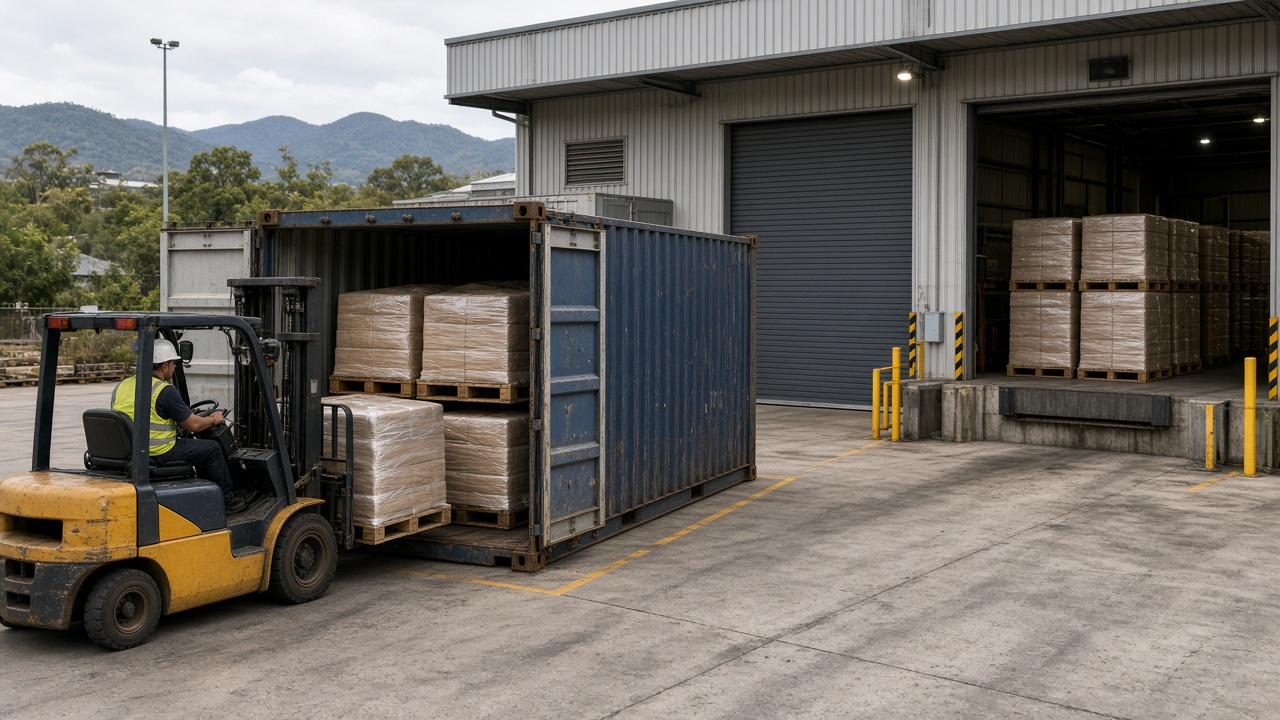
Manufacturing import consolidation
Client profile: SEQ metal fabrication business importing components from three suppliers in southern China.
Mode: Ocean LCL via Port of Brisbane · Duration: Ongoing programme established 2023
Challenge
The client’s purchase orders were fragmented across suppliers with mismatched ready dates. Separate LCL bookings produced inconsistent CFS charges, duplicated documentation effort, and unpredictable deconsolidation at Brisbane. Production planners could not rely on a steady Tuesday receival window.
Approach
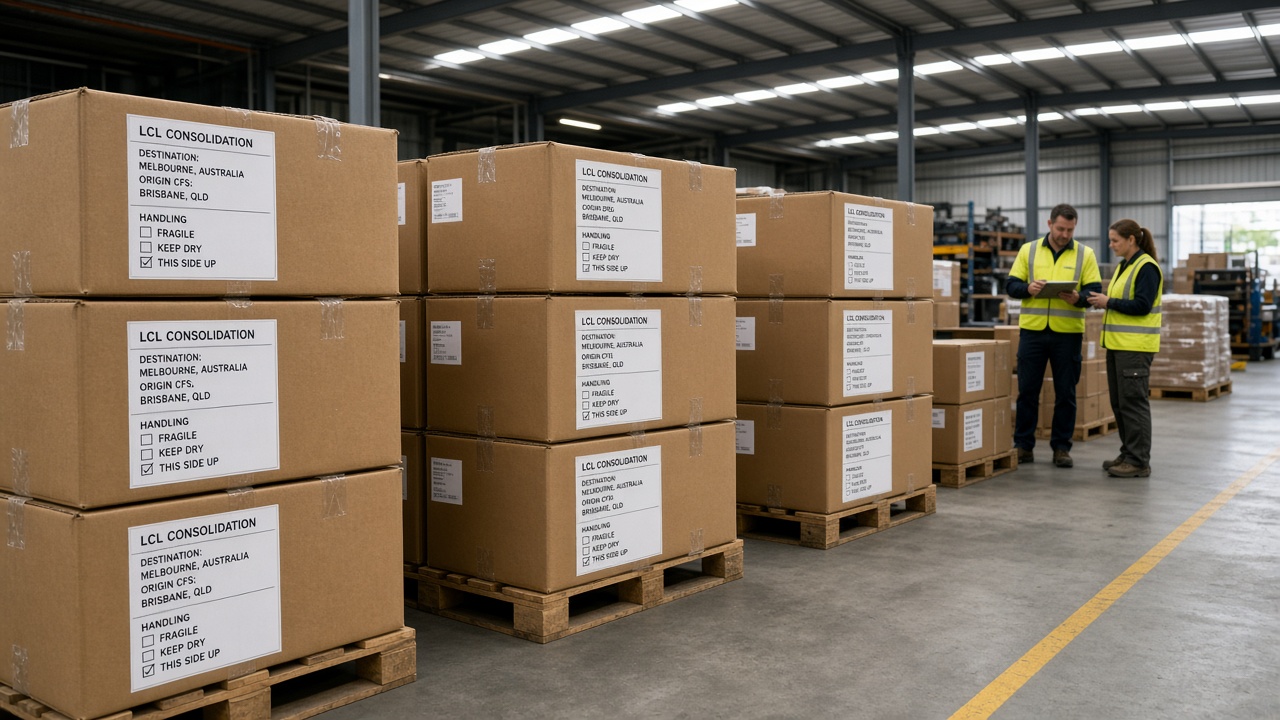
RKM Logistics implemented a rolling consolidation calendar: suppliers deliver to a nominated origin CFS within a defined week, we merge cargo under one house bill, and align vessel selection to a Port of Brisbane arrival that feeds a fixed Wednesday road slot to the client’s Wacol receival bay. Document templates were issued to each factory to harmonise HS descriptions and gross weights.
Outcome
Average landed cost per cubic metre decreased after eliminating redundant origin pickups. Deconsolidation dwell dropped below three days in most weeks. Production reported a reliable components buffer without maintaining excessive safety stock.

Lessons
Supplier compliance improves when templates are bilingual and include photo examples of acceptable packaging. Consolidation savings erode if one supplier habitually misses the CFS cut-off — contractual ready dates with the client’s procurement team matter as much as freight routing.
Metrics and governance
After stabilisation, the client tracked weekly cubic metres landed, CFS dwell days, and receival punctuality against production slots. RKM Logistics reported exceptions before they breached the Wednesday receival commitment — rolled vessels triggered proactive rebooking rather than silent drift.
Origin factories received a quarterly scorecard on template compliance (weights, HS descriptions, packaging photos). Non-compliant cartons were held at CFS until clarified, protecting the wider consolidation from examination spillover.