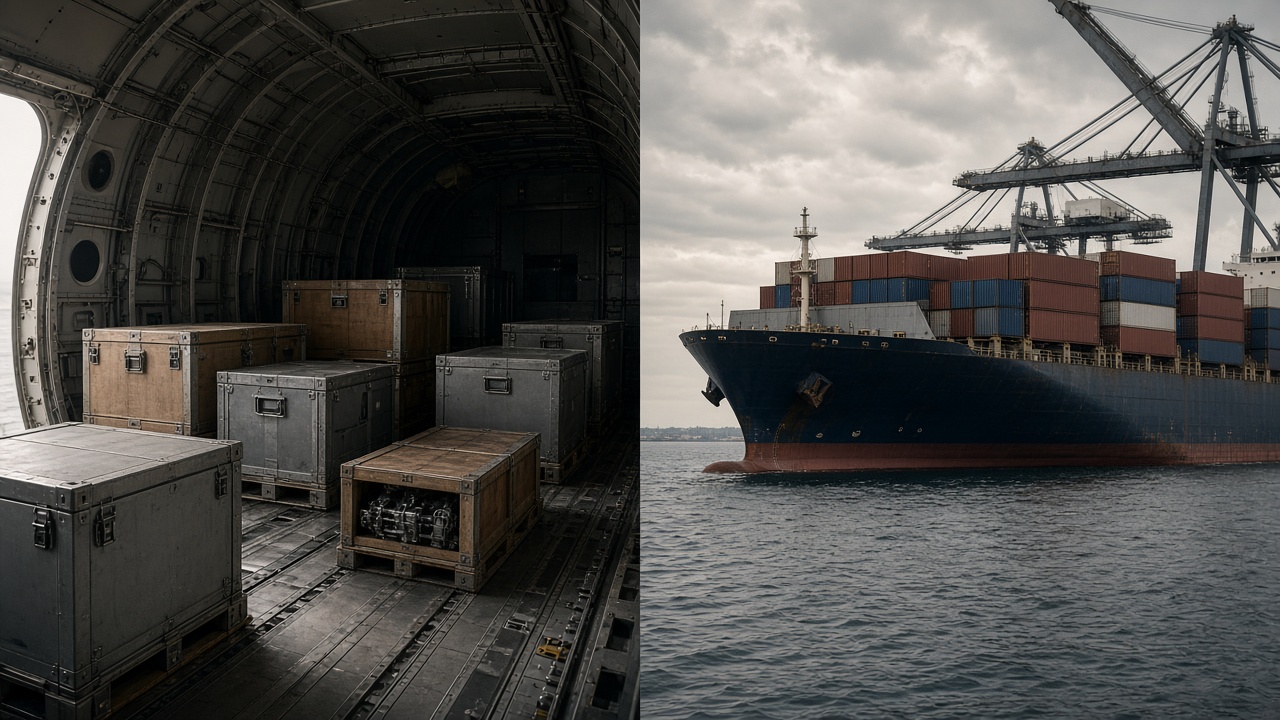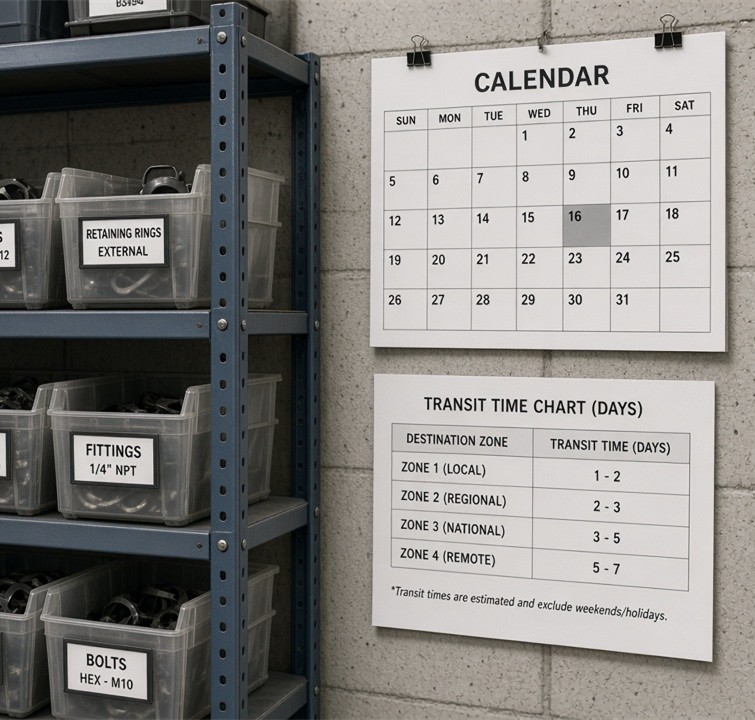
Air vs sea for critical spares
Maintenance organisations often default to air freight for any “urgent” spare, eroding budget without reducing downtime. RKM Logistics applies a simple decision frame: compare expected production loss per day to the all-in premium of air over sea, including customs and final mile — not airline spot rate alone.
Sea remains viable when shutdown dates are known weeks ahead and the part is not on a single-source vessel delay. Air wins when mining, energy, or manufacturing loss exceeds freight premium within the first twenty-four to forty-eight hours of delay.
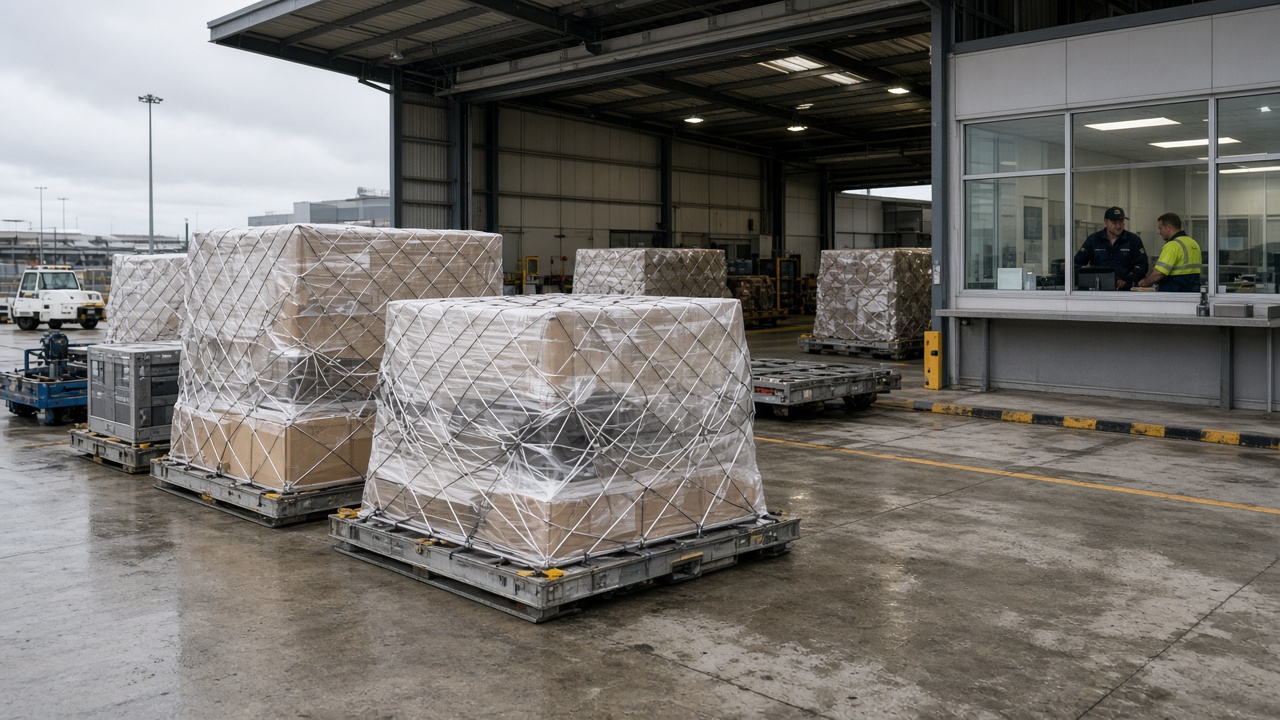
Hybrid strategies work: sea for baseline replenishment, air for rotable exchange units with defined serial numbers tracked in CMMS systems. Document who approves mode escalation to avoid ad hoc panic bookings.
Critical spares programmes should maintain origin data — weight, dimensions, export controls — before breakdown occurs. Quoting during a shutdown wastes hours copying specs from manuals under stress.
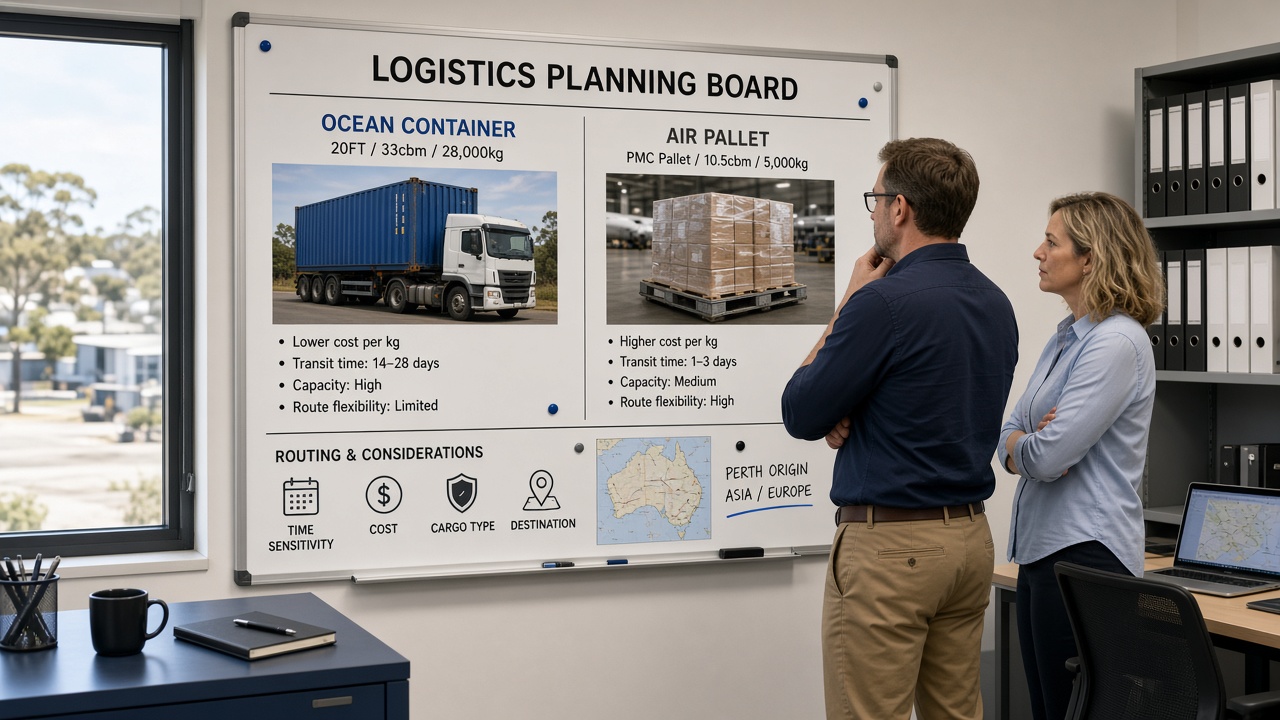
Post-incident reviews often reveal that air freight was booked before confirming whether partial repair or substitute components could restore production. Building a spare-part criticality matrix — with pre-agreed mode thresholds — removes emotion from breakdown-day decisions.
RKM Logistics supports clients with side-by-side sea and air scenarios during programme setup so maintenance and finance share the same escalation rules before equipment fails.
Total cost comparison
Compare all-in air versus all-in sea: origin charges, main leg, fuel and security surcharges, customs brokerage, terminal or CFS dwell assumptions, and final mile. A spot air rate that ignores arrival handling can look cheaper than it is; a sea rate that ignores shutdown cost can look expensive when downtime is quantified.
Document the decision before breakdown
Maintenance and finance should agree cost-of-delay assumptions per asset class while equipment is running. CMMS criticality codes map cleanly to pre-approved mode escalation — emergency bookings without thresholds usually overspend on air without shortening outage.
Sea replenishment for predictable wear parts plus air for exchange units stays a practical split when origin data and weights are confirmed before failure.